Info and guidelines
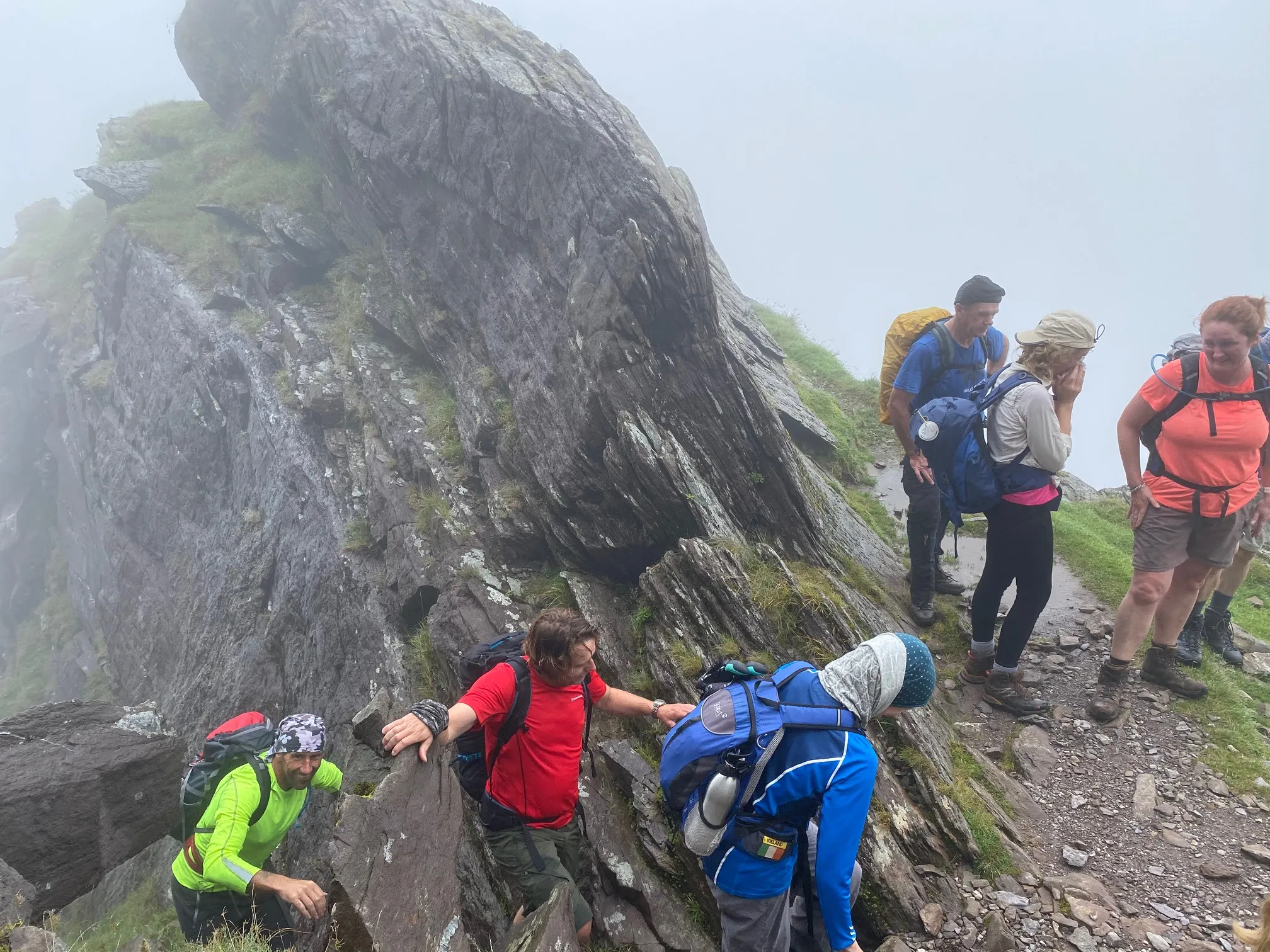
Please read and understand this page before joining us on the mountains. For routes, weather forecasts and more, visit slikerry.com.
Member guidelines
- Hikes are for Laune MC members, but over 18s are welcome to try two hikes before joining. Email the club secretary at launemc@gmail.com if you'd like to come along. Members of other Mountaineering Ireland clubs are welcome to join us, conditions allowing.
- If a member wants to bring a non-member, they must ask the leader beforehand and get the new hiker to read these guidelines.
- The leader decides the route and can cancel, postpone, move or shorten a hike. The leader can also refuse anyone who is not properly equipped or who they feel is not fit enough. The leader's decision is final in all cases.
- Please tell the leader about any health conditions. Keep details of your condition and your emergency contacts in the top or front pocket of your rucksack.
- The minimum for hiking with the club is proper boots and waterproofs.
- Dogs are not allowed on club hikes.
- Car pooling is encouraged. Park safely, and make sure you never block access to property.
- Weather can change, and an Easy or Moderate walk can become a harder one.
- If you feel unwell, tell the leader, who will make suitable arrangements.
- We follow Leave No Trace principles and Mountaineering Ireland's guidance on caring for the environment.
- All land is owned by somebody. We use it with the goodwill of the owner, not as a legal right, and that goodwill can be withdrawn. Be friendly and courteous when you meet landowners and local residents.
- If you don't want your photo taken, please tell the leader on the day of each hike.
Hill walking, scrambling and climbing can be dangerous and may result in injury or death. Participants should be aware of and accept these risks and be responsible for their own actions. Members of the Laune Mountaineering Club committee and walk leaders are not responsible for any loss or injury to any person or their property during club activities.
What to bring
- Rucksack
- One with adjustable hip and shoulder straps is more comfortable.
- Packed lunch
- Bring more than you think you need, and some handy snacks.
- Plenty of fluids
- Lots of water, and maybe a hot drink in cold weather.
- First aid kit
- A personal kit. Be ready to help carry the larger club first aid kit too.
- Torch
- In case darkness falls before you're off the mountain, and to attract attention in an emergency.
Boots
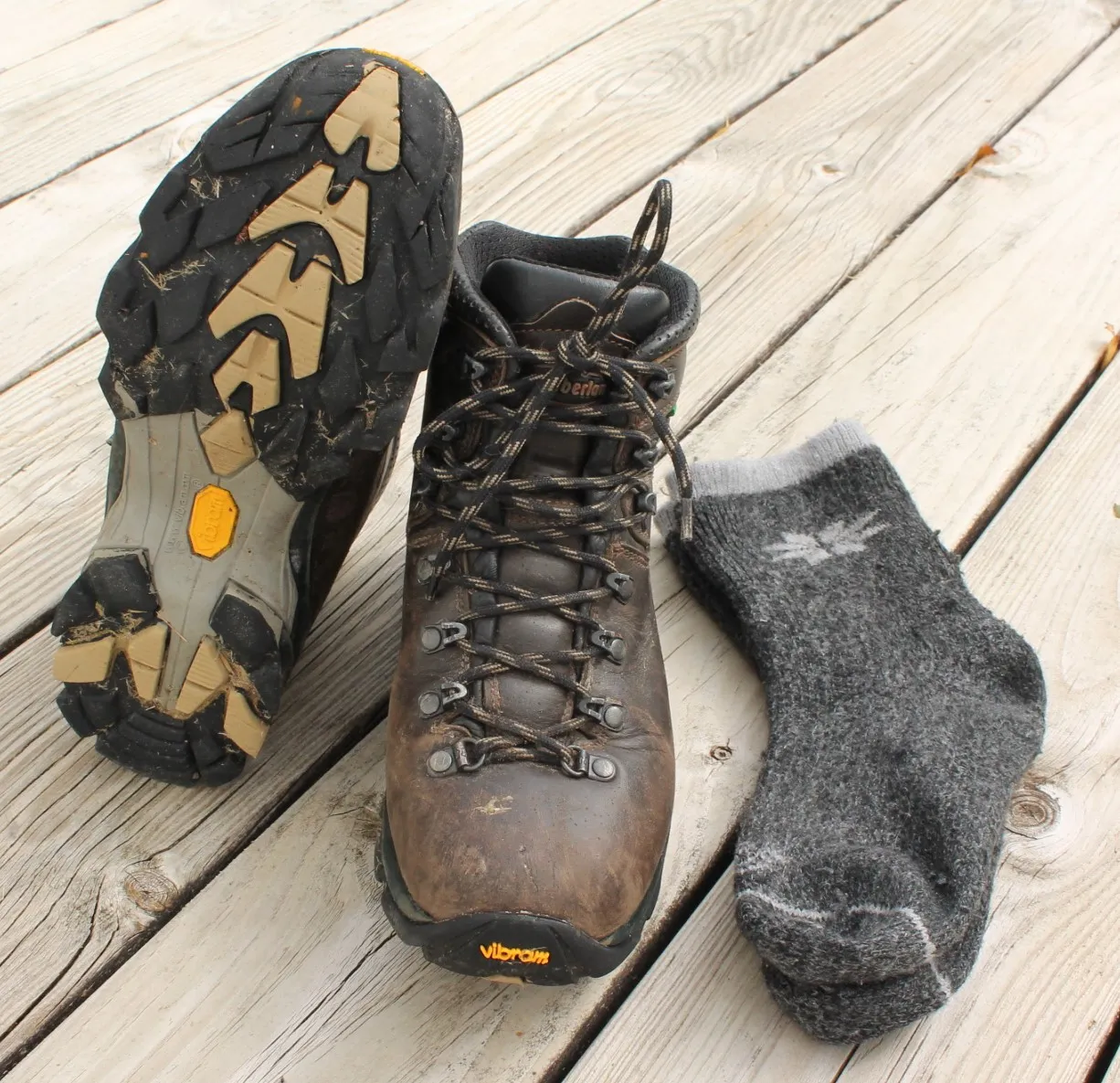
For Moderate, Moderate/Hard, Hard and Very Hard walks you need full mountain boots with Vibram soles (look for the yellow Vibram mark). Trekking boots or hill-walking runners are fine for some Easy and Easy/Moderate walks, but check with the leader first.
If you're breaking in new boots, bring Compeed or other blister tape. For laces that never come undone, see tying your boot laces below.
Clothes
Dress in layers. Quick-drying layers of different weights let you adapt to our "four seasons in one day" weather. Everything should be wicking, breathable and quick-drying.
Running clothes will do to start you off on easier walks, but they aren't made for a whole day of mixed weather. If you're buying something new, buy good quality mountaineering gear. You only need one set, so buy the best you can afford. O'Sullivan's Outdoors in Killarney and Landers in Tralee stock quality gear and can give advice.
Always carry extra layers, a hat and gloves: it can be cold at the top even on the finest summer day. Avoid cotton, which is slow to dry and gets heavy when wet. No denim (see why).
The basics
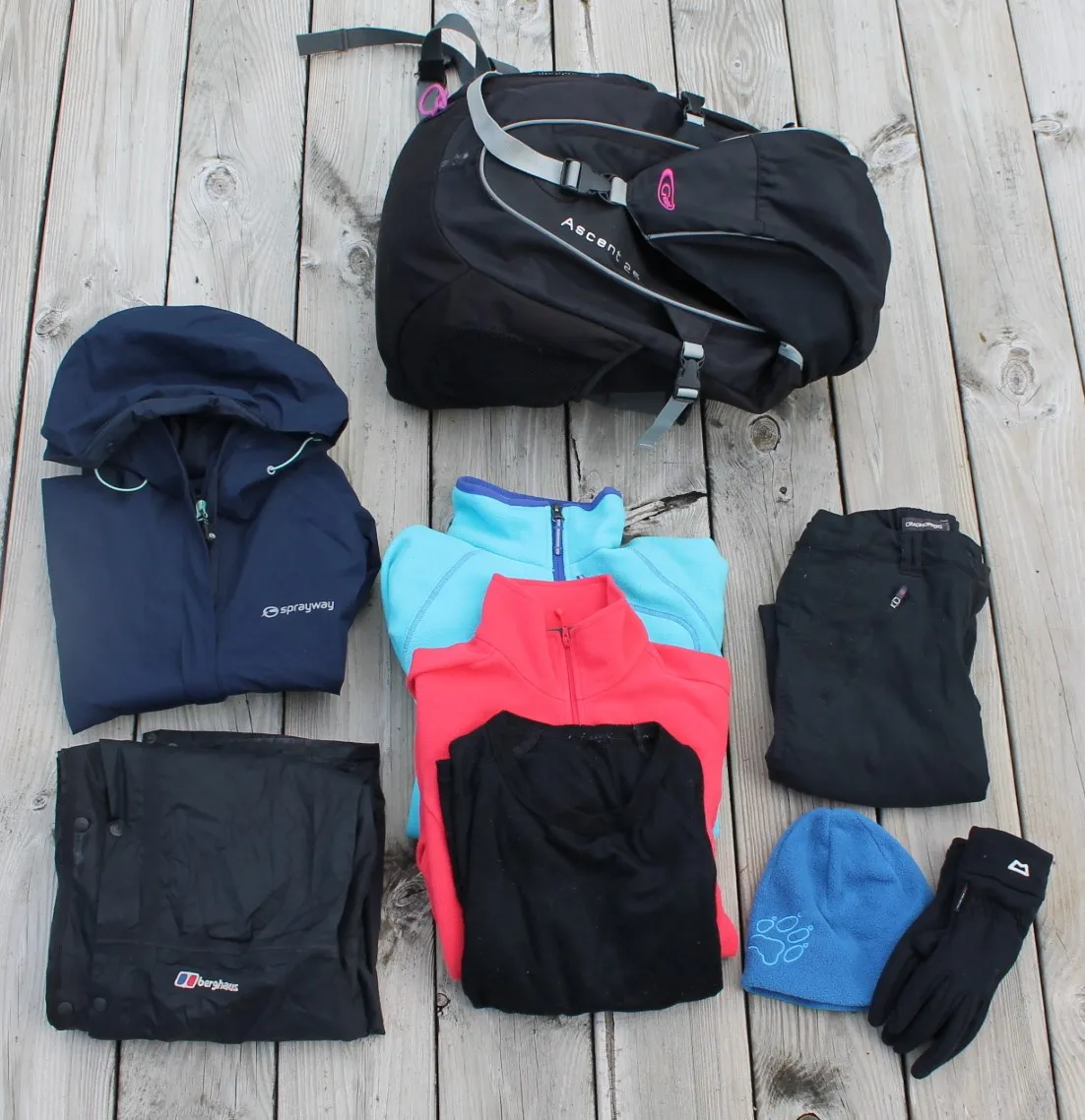
- Wicking base layer
- Merino wool or a lightweight fleecy top.
- Mid layer
- A lightweight fleece or merino wool.
- Extra top layers
- Fleeces, for example. You may wear several in winter, adding or removing them as you warm up and cool down.
- Trousers or leggings
- Lightweight and quick-drying. Avoid cotton, and no denim. In very cold weather, wear base layer leggings underneath.
- Waterproof jacket
- Essential for keeping you dry and cutting the chill of the wind.
- Waterproof trousers
- Fully waterproof and breathable (Gore-Tex recommended), or you'll get wet from the inside out. Side zips up to the hip let you get them on and off over your boots.
- Socks
- The best hiking socks you can afford: a heavy pair for cold weather and lighter ones for warmer days. Carry a spare pair.
- Hat
- A wool or fleece hat to keep in heat in the wind, even in summer, and a sun hat.
- Gloves
- Carry a spare pair for wet days. You'll appreciate the comfort.
Recommended extras
- Spare fleece, hat, socks and gloves
- Sun protection and midge cream
- Survival bag (group shelter, bivvy bag or space blanket)
- A large plastic bag to line your rucksack and keep things dry
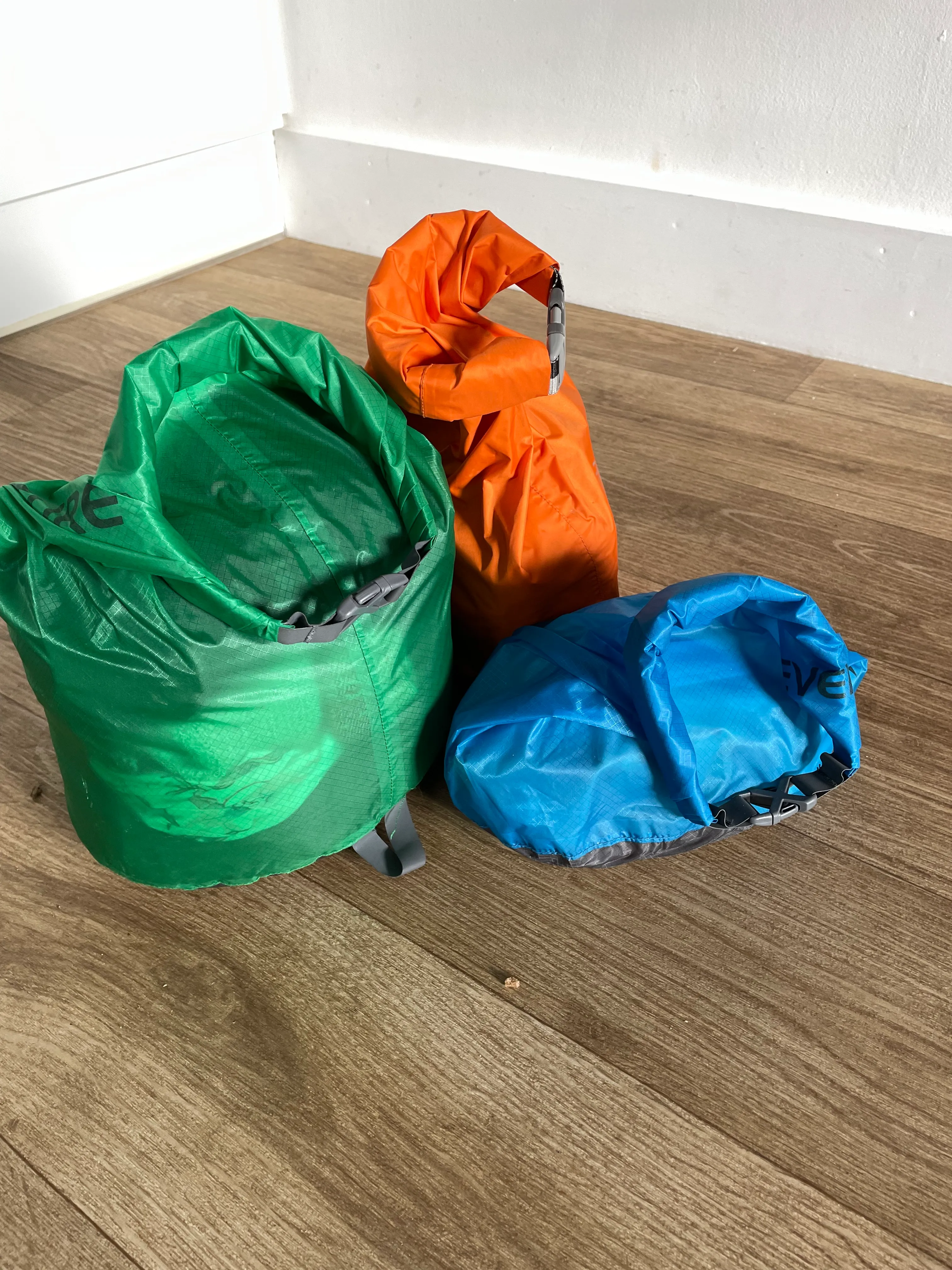
- Dry bags, to pack your first aid kit, spare clothes, phone, keys and snacks separately
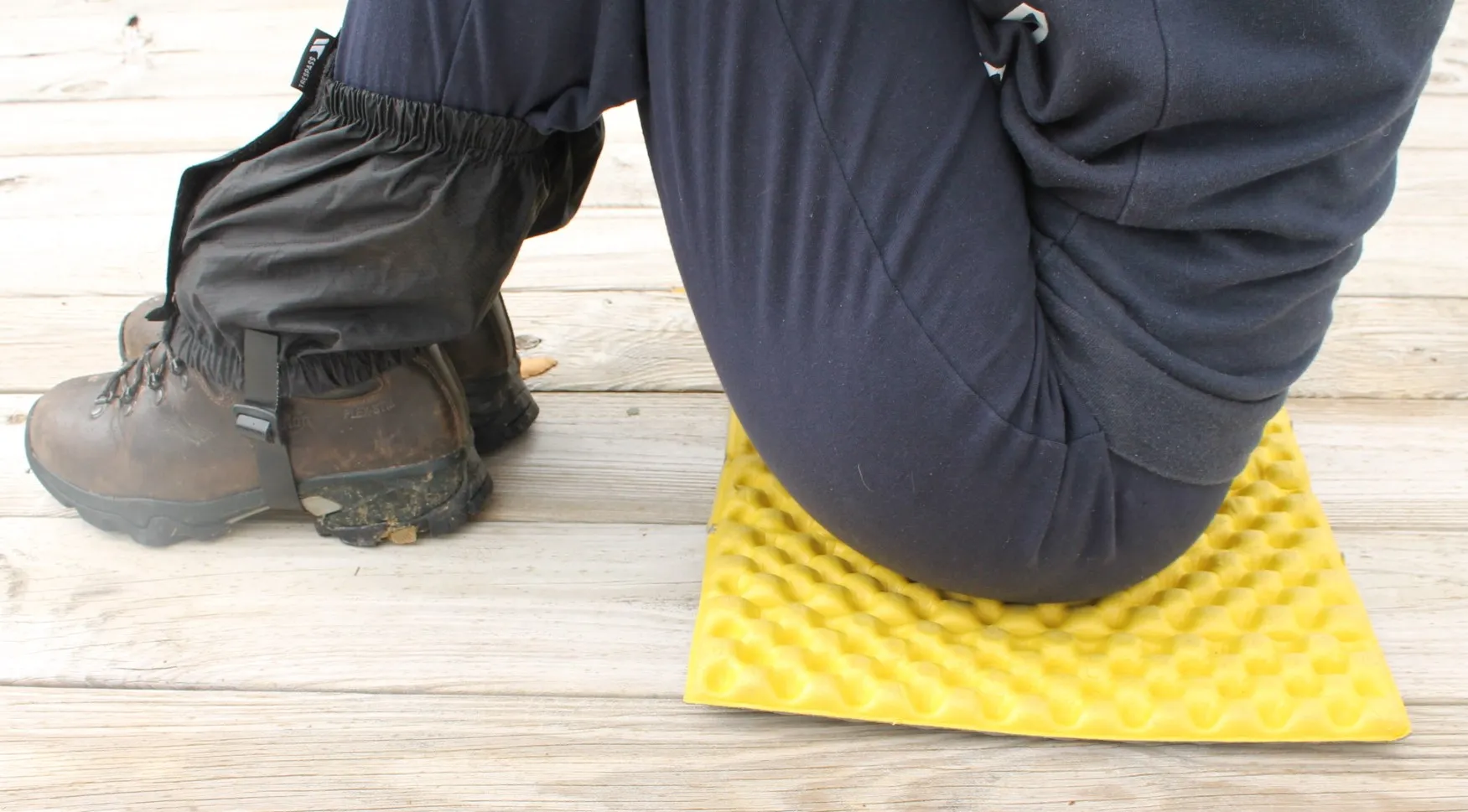
- A folding sit mat
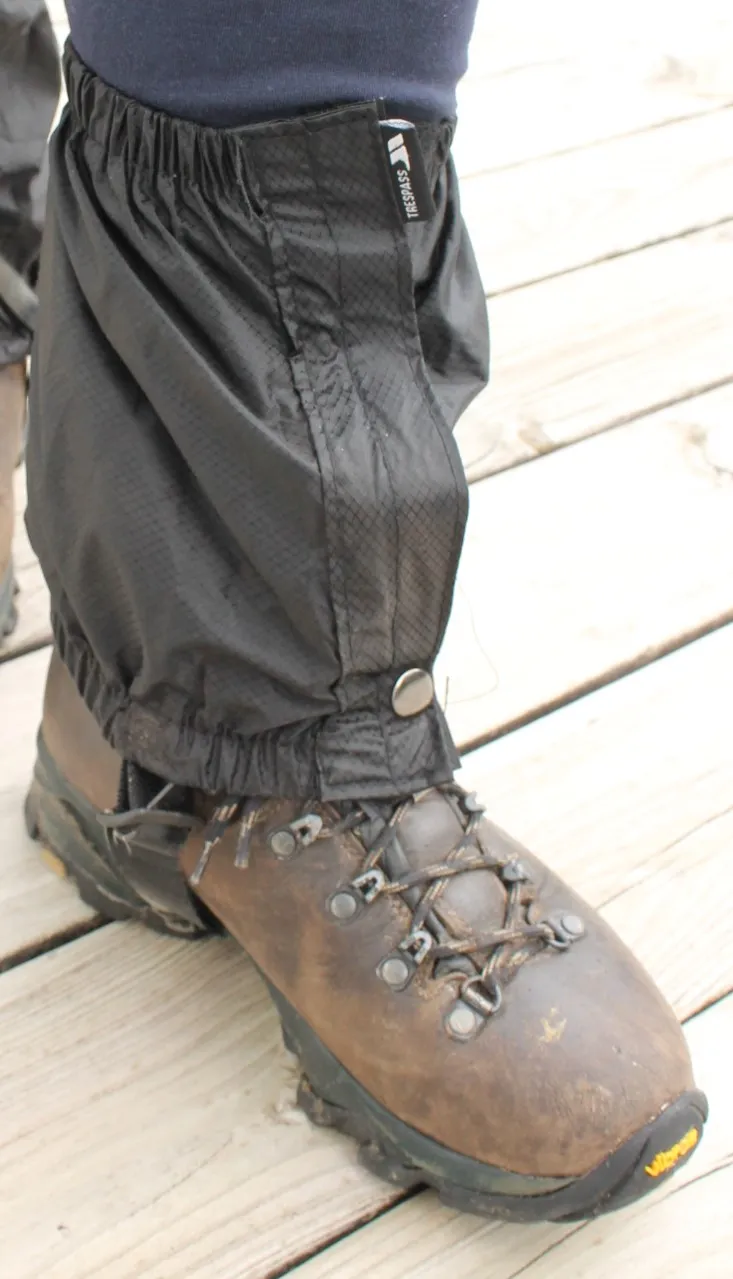
- Gaiters for boggy ground (knee-high or calf length)
- A change of clothes for when you get back to the car
Ticks and Lyme disease
Remove ticks as soon as possible after a hike, within 12 hours if you can, to prevent Lyme disease. Long grass and ferns are the worst areas. Wear long trousers tucked into socks or gaiters, and long sleeves. Afterwards, check for ticks especially in skin folds, your neck, underarms, groin and the backs of your knees. Some insect repellents claim to help.
It's important to remove ticks properly: watch how to remove a tick and read the HSE guide to Lyme disease.
Be prepared: don't wear denim
Respect wild places, even when they look gentle. The low height and rounded shape of Irish mountains can fool people into taking them lightly, but their wet and wind can make them just as dangerous as bigger mountains elsewhere.
Most injuries come from accidents or existing health conditions, but exhaustion and exposure can cause or worsen incidents. One of the best protections is the right clothing.
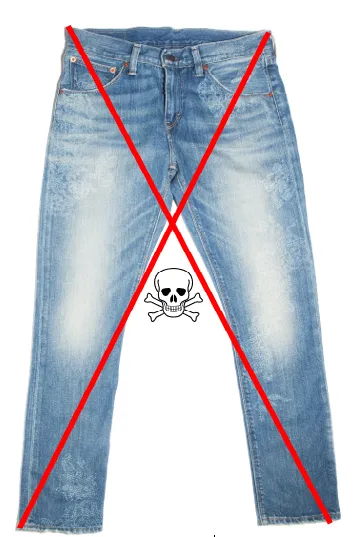
In 1964, three fit young men died on a walk in the Peak District in the UK. They were wearing hooded anoraks, wool jerseys, cotton shirts and underwear, and jeans. A test recreating their conditions found that wind and rain together cut the warmth of their clothing by 85%, and jeans were among the worst. The body responds to cold by shivering, which burns energy and makes you more tired, leading to a deadly cycle of fatigue and hypothermia. It is often better to find shelter and wait for help than to try to walk out of a difficult situation.
That's why mountains need proper clothes: no jeans and no cotton. Modern mountain clothing is wicking, quick-drying, breathable, waterproof and life-saving.
Protecting our environment
Laune MC supports Leave No Trace principles.
- Take all litter home. That means everything: orange peel and banana skins take two years to break down, plastic bags 10 to 20 years, and a plastic bottle 450 years.
- Stick to existing trails.
- Respect wildlife. Watch from a distance, never feed animals, and avoid them during mating and nesting.
- Dogs are not allowed on club hikes, and are not allowed on the Reeks at any time.
- Be courteous and give way to other people on the trail.

Outdoor clothes and our water
Synthetic clothes, especially fleeces, are some of the worst sources of microplastics in our water and food chain. To reduce the damage:
- Wash synthetic clothes as little as possible. Air them outside instead.
- Wash them in a Guppyfriend bag, in cool water (30 degrees at most).
- Use liquid detergent rather than powder.
- Buy as few synthetic clothes as you can. One set of mountain clothes is usually enough.
- Use stainless steel bottles for water (it tastes better too) and paper or waxed cotton lunch wraps.
Tying your boot laces
Laces coming undone is a common problem. Try the surgeon's knot and they'll never untie by themselves. A quick, firm pull on the two loose ends and they come undone easily.